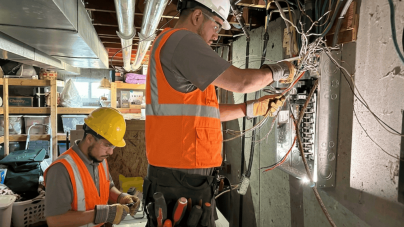
A breaker panel upgrade should begin with an evaluation of your home’s electrical system—not an assumption that you need a larger panel. An electrician will assess the existing equipment and connected loads, discuss planned improvements, and explain the work, permits, utility coordination, and expected power interruption before preparing a project-specific estimate.
When to have your electrical panel evaluated
Repeated breaker trips, flickering or dimming lights, unusual heat, buzzing or sizzling sounds, sparks, or a burning odor can be signs of an electrical hazard. Contact a qualified electrician to assess the problem. Do not remove the panel cover or attempt to inspect energized components yourself. These symptoms do not automatically mean the entire panel needs replacement; the cause may be a circuit or another part of the system.
A planned improvement can also prompt an evaluation. Kitchen renovations, new appliances, additions, workshops, hot tubs, and electric vehicle chargers may change the home’s electrical needs. Whether the panel needs replacement or additional capacity depends on the existing system and the loads it must serve.
What the on-site evaluation covers
The electrician should inspect accessible service equipment and the panel, review available breaker spaces, and consider visible wiring, grounding and bonding, and the circuits connected to the system. Be ready to describe any recurring problems and the improvements you are planning.
A useful evaluation distinguishes a panel problem from a branch-circuit problem. One overloaded or damaged circuit does not necessarily mean the whole panel must be replaced. Likewise, adding a breaker may not address a broader equipment or capacity issue. Ask the electrician to explain the recommended work and provide a written scope.
How the electrician plans for your home’s electrical loads
Electrical demand depends on the equipment in the home, not just its square footage. Heating and cooling systems, cooking and water-heating equipment, laundry, pumps, workshops, and planned additions can all affect the assessment.
Mention future projects during the first visit. A kitchen remodel, spa, or other substantial load may affect how the electrician plans the work, even if you are not installing that equipment now. This does not mean every future circuit needs to be installed immediately; it helps the electrician understand what the system may need to support.
Permits, inspections, and utility coordination in Oakdale
Permit and inspection requirements depend on the project and the local building department. The City of Oakdale advises applicants to contact its Building Division before applying because a building permit application may not be the only or first step. The City reports an average processing time of two to four weeks for building permit applications, with possible delays if corrections are needed. That is a general average, not a panel-specific timeline or a guarantee.
Oakdale’s Municipal Code adopts the 2025 California Electrical Code, with local amendments. Ask the City Building Division and your electrician which requirements apply to your project and who will coordinate the permit and inspection.
If work involves the meter or service equipment, coordination with the serving utility may also be needed. Confirm which utility serves your address and ask whether the proposal includes any required utility coordination. Utility processes vary; for example, PG&E’s panel-upgrade guidance describes a load assessment and possible work on utility infrastructure, but that process should not be assumed to apply to every Oakdale home.
What happens during installation
The installation sequence depends on the approved scope and the home’s service arrangement. In general, the electrician coordinates the planned power interruption, replaces or modifies the equipment covered by the proposal, completes the necessary connections, and prepares the work for verification and any required inspection.
Ask how long power may be unavailable and what could affect reconnection. Plan for household needs such as refrigeration, medical equipment, well equipment, gates, internet, and work-from-home arrangements. Do not improvise electrical connections during the outage.
How to compare panel-upgrade estimates
Compare what each proposal includes, not just the total price. A clear estimate should explain the work to be done, any related components that may be affected, who handles permit and inspection coordination, and how the electrician will discuss unforeseen conditions before proceeding with additional work.
Ask whether utility coordination, permit fees, inspection-related corrections, and restoration of affected areas are included or priced separately. A project-specific written scope is more useful than a general price that does not account for the home’s equipment and site conditions.
Before hiring, check the contractor’s license status through the California Contractors State License Board (CSLB). The CSLB provides an online license lookup; a license number shown in an advertisement or estimate is not a substitute for checking the current record.
How to prepare for an estimate
Write down the symptoms you have noticed and when they occur. Make a list of planned appliances or home improvements, gather any records of previous electrical work, and clear access to the panel. Do not open the enclosure or handle internal components.
If you have equipment information or remodel plans, share them with the electrician. Only take photographs of labels or equipment when you can do so safely without approaching exposed wiring.
Frequently asked questions
Does a breaker that keeps tripping mean I need a new panel?
Not necessarily. A tripping breaker can point to a circuit problem or another issue that requires evaluation. An electrician can determine whether the appropriate fix is a circuit repair, panel work, or something else.
Do I need a permit for a panel upgrade in Oakdale?
The City’s general permit information does not establish a single rule for every panel project. Contact the Oakdale Building Division about the specific scope before work begins, and ask your electrician, who will coordinate any required application and inspection.
How long will the power be off?
The outage depends on the work, the home’s service arrangement, and any utility or inspection coordination. Ask the electrician for the expected interruption and what could change it before scheduling the work.
What should an estimate include?
It should define the proposed work, explain permit and inspection responsibilities, identify possible related costs, and describe how changes in scope will be handled. Ask questions about anything unclear before approving the proposal.
Plan the next step
Jason Davis Electric lists breaker-box repairs and upgrades, including meter-panel upgrades, among its Oakdale-area residential electrical services. The company’s website offers free, no-obligation estimates and describes an on-site evaluation to determine the project scope. Contact Jason Davis Electric to discuss your home’s existing panel, planned loads, and the work an electrician recommends.