EV Charger Installation in Modesto, CA: Upgrade to Level 2 Charging at Home
The transition to electric vehicles is accelerating across California, and Modesto is no exception. As more Central Valley residents make the switch to electric, the question of how to charge at home becomes one of the first practical challenges to solve.
Most EVs come with a standard Level 1 charging cord that plugs into a regular 120V household outlet. This works, but it’s slow, often taking 24 hours or more to fully charge a depleted battery. For daily driving, that’s not practical. Upgrading to a Level 2 home charging station transforms the experience, giving you a full charge overnight and eliminating the need to plan your schedule around your car’s battery level.
Jason Davis Electric, Inc. is the trusted EV charger installation electrician in Modesto. With over 25 years of union-trained expertise, the team provides seamless, code-compliant installations that let you charge your vehicle safely and quickly from your own garage.
Level 1 vs. Level 2 Charging: Understanding the Difference
Before getting into the installation process, it helps to understand what you’re upgrading from and to.
Level 1 Charging (120V)
Level 1 charging uses a standard household outlet, the same type used for lamps and phone chargers. It delivers approximately 3 to 5 miles of range per hour of charging. For a vehicle with a 60 kWh battery that’s been fully depleted, that means 12 to 20 hours of charging time. For occasional use or very short daily commutes, this may be adequate. For most drivers, it isn’t.
Level 2 Charging (240V)
Level 2 charging uses a dedicated 240V circuit, the same voltage as an electric clothes dryer or range. It delivers approximately 20 to 30 miles of range per hour of charging, depending on the vehicle and the charger’s output. A fully depleted battery in most EVs can be recharged in four to eight hours, meaning your car is ready to go every morning regardless of how much you drove the day before.
| Charging Level | Voltage | Miles Added Per Hour | Full Charge Time (60 kWh) |
|---|---|---|---|
| Level 1 | 120V | 3–5 miles | 12–20 hours |
| Level 2 | 240V | 20–30 miles | 4–8 hours |
What Your Home Needs for a Level 2 Installation
A Level 2 charger requires a dedicated 40-amp to 60-amp, 240V circuit. Here’s what that means for your home:
Panel Capacity
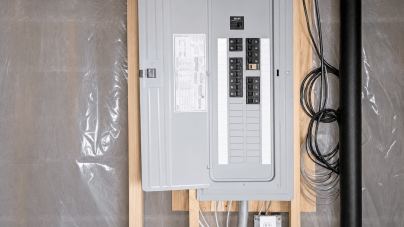
Your electrical panel must have an available slot for a new 40-amp or 50-amp double-pole breaker. If your panel is already full or doesn’t have sufficient capacity, a panel upgrade may be required before the charger can be installed. This is one of the first things a licensed electrician will assess during an on-site evaluation.
Wiring and Conduit
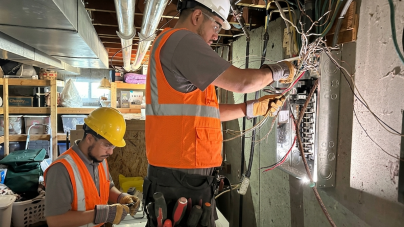
The circuit must be wired with appropriately sized conductors from the panel to the charger location. In most cases, this means running new wire through the garage wall or ceiling. If the panel is in a different part of the house, the run may be longer and require conduit in certain sections.
Charger Location
Most homeowners install the charger on the wall of their garage, positioned to reach the vehicle’s charging port without the cord stretching across a walkway. The exact location affects the length of the wire run and the mounting approach.
NEMA 14-50 Outlet vs. Hardwired Charger
There are two approaches to Level 2 installation:
- NEMA 14-50 outlet. A 240V outlet is installed, and the charger plugs into it. This allows you to take the charger with you if you move.
- Hardwired charger. The charger is wired directly to the circuit. This is a cleaner installation and is required by some charger manufacturers for warranty compliance.
A licensed electrician can advise on which approach makes more sense for your specific charger and situation.
Charging at home with a Level 2 station is significantly less expensive per mile than using public charging networks. Combined with PG&E’s time-of-use rates, charging overnight during off-peak hours can reduce your per-mile energy cost substantially.
Permits and Code Compliance
EV charger installations in Modesto require a permit from the City of Modesto. This is a legal requirement, not a formality. The permit process ensures the installation is inspected and confirmed to meet NEC requirements and local building codes.
Jason Davis Electric handles the entire permitting process as part of the installation. The team ensures the wiring is correctly sized, the conduit is properly routed, and the charger is securely mounted. Installations are designed to pass city inspection on the first visit.
Unpermitted electrical work creates problems when you sell your home, it’s one of the items a home inspector will flag, and it can complicate or delay a sale. Doing it right from the start protects your investment.
The Installation Process
Here’s what a standard Level 2 EV charger installation looks like:
- On-site evaluation: The electrician assesses your panel, identifies the best circuit route, and confirms the charger location.
- Estimate: A detailed written estimate is provided before any work begins.
- Permit application: The required permit is pulled from the City of Modesto.
- Panel work: A new breaker is installed if needed.
- Wiring: New 240V wiring is run from the panel to the charger location.
- Outlet or charger installation: The NEMA 14-50 outlet or hardwired charger is installed and secured.
- Testing: The circuit is tested to confirm correct voltage and polarity.
- Inspection: A city inspector verifies the installation meets all applicable codes.
Most installations are completed in a single day. If a panel upgrade is also required, the project may take two days.
Available Incentives for EV Charger Installation in California
California and PG&E offer several programs that can reduce the cost of EV charger installation:
PG&E EV Rate Plans. PG&E offers time-of-use (TOU) rate plans specifically designed for EV owners. By charging during off-peak hours, typically overnight, you can significantly reduce the per-mile cost of driving electric. The savings can be substantial for drivers who charge regularly at home.
California Clean Vehicle Rebate Project (CVRP). While primarily focused on vehicle purchase rebates, the CVRP program supports EV adoption broadly. Check the current program status at the time of your installation for available incentives.
Federal Tax Credit. The federal Alternative Fuel Vehicle Refueling Property Credit may provide a tax credit for the cost of purchasing and installing an EV charger at your home. Consult a tax professional to determine your eligibility and the current credit amount, as tax law changes periodically.
Utility rebates. PG&E and other California utilities periodically offer rebates for EV charger equipment purchases. Check PG&E’s current incentive programs at the time of your installation.
A licensed electrician can provide guidance on the installation requirements that must be met to qualify for these programs.
Planning for Multiple Vehicles
If your household has or is planning to have more than one electric vehicle, it’s worth thinking about your charging infrastructure now rather than retrofitting later.
Adding a second Level 2 circuit later is possible but more expensive than planning for it from the start. If your panel has the capacity, installing two circuits during the initial project, even if you only need one charger now, is a cost-effective way to future-proof your setup.
For households with two EVs, a load management system can also be an option. These systems monitor the total electrical load of the home and automatically adjust the charging rate of each vehicle to stay within the panel’s capacity, preventing overloads without requiring a panel upgrade.
Frequently Asked Questions About EV Charger Installation
Can I install a Level 2 charger in an apartment or condo? This depends on your building’s electrical infrastructure and the rules of your homeowners association or building management. Some multi-unit buildings have begun installing shared EV charging infrastructure. If you’re in a multi-unit building, the first step is to discuss the options with your building management.
How long does the installation take? Most standard installations are completed in a single day. If a panel upgrade is also required, the project may take two days.
Does the charger need to be from a specific brand? No. A licensed electrician can install any UL-listed Level 2 charger. The most important factors are that the charger is compatible with your vehicle and that the circuit is correctly sized for the charger’s output.
What happens to the charger if I move? If you installed a NEMA 14-50 outlet rather than a hardwired charger, you can take the charger with you. The outlet remains as a standard 240V outlet that the next owner can use for another charger or for other 240V appliances. If the charger is hardwired, it typically stays with the home.
Schedule Your EV Charger Installation in Modesto
Jason Davis Electric serves Modesto and nearby areas including Turlock, Ceres, Riverbank, Stockton, and the greater Central Valley. The team is licensed (Lic #952358), bonded, and insured.
Call (209) 521-6741 or contact us online to schedule an on-site evaluation. The team will assess your home’s electrical system and provide a detailed estimate for the complete installation.