Whole House Surge Protection in Central Valley, CA: Safeguard Your Electronics
Modern homes in the Central Valley are filled with expensive, sensitive electronics. Smart TVs, high-end kitchen appliances, advanced HVAC systems, home automation networks, gaming systems, and home office equipment all depend on microprocessors, and microprocessors are highly vulnerable to power surges.
Most homeowners rely on standard plug-in surge protector strips for protection. These provide some defense at the point of use, but they’re not designed to handle large external surges, and they do nothing to protect hardwired appliances like your HVAC system, refrigerator, or well pump. Whole house surge protection addresses the threat at the source, at your main electrical panel, before a surge can reach any device in your home.
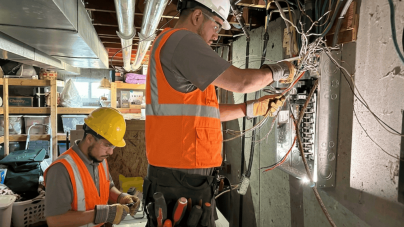
Jason Davis Electric, Inc. provides comprehensive electrical safety solutions for homes across the Central Valley. With over 25 years of union-trained experience, the team installs whole house surge protective devices (SPDs) that provide a robust first line of defense against power fluctuations.
Understanding Power Surges
To understand why whole house protection matters, it helps to know where surges come from and what they actually do.
External Surges
External surges originate outside your home, from the utility grid. Common causes include:
- Lightning strikes. The most dramatic cause, though not the most common
- Downed power lines. Can send large voltage spikes through the grid
- Grid switching. Utility companies routinely switch circuits during maintenance or load balancing, which can create transient voltage spikes
- Power restoration after an outage. When power comes back on after an outage, the restoration process can introduce a surge
External surges can be large and destructive, capable of instantly damaging or destroying appliances and electronics.
Internal Surges
Here’s what most homeowners don’t know: up to 80% of power surges are generated internally, within the home itself. Every time a high-draw appliance, an air conditioner, refrigerator, well pump, or electric dryer, cycles on or off, it creates a brief voltage spike that ripples through the home’s electrical system. These internal surges are small individually, but they occur dozens or hundreds of times per day.
The cumulative effect of these micro-surges is what the industry sometimes calls “electronic rust”, gradual degradation of the delicate microprocessors in your electronics. Devices that should last 10 to 15 years fail after five or six. Appliances develop intermittent problems that are difficult to diagnose. The damage is real, even if it’s invisible.
How a Whole House Surge Protective Device Works
A whole house SPD is installed directly at your home’s main electrical panel. Here’s what it does:
Stopping Surges at the Point of Entry
When a voltage spike enters your electrical panel from the utility line, the SPD detects the excess voltage instantly. It then safely diverts the dangerous surge away from your home’s internal wiring and channels it into the ground. By stopping the surge at the point of entry, before it can travel through your home’s circuits, the SPD protects every outlet, switch, and hardwired appliance in the house simultaneously.
This is the fundamental limitation of plug-in surge protectors: they only protect the devices plugged into them. Your HVAC system, refrigerator, dishwasher, water heater, and any other hardwired appliance gets no protection from a plug-in strip. A whole house SPD protects all of them.
Response Time
Whole house SPDs respond to voltage spikes in nanoseconds, far faster than any surge can cause damage to connected equipment. The protection is essentially instantaneous.
A Layered Protection Strategy
For the best protection, Jason Davis Electric recommends combining a whole house SPD with point-of-use protection for particularly sensitive equipment.
Layer 1: Whole house SPD at the main panel. Stops large external surges and significantly reduces internal surges before they can travel through the home’s wiring.
Layer 2: Quality plug-in surge protectors at the point of use. Provides secondary protection for sensitive electronics like computers, home theater systems, and gaming consoles. Catches any residual voltage that gets past the whole house device and protects against the minor internal surges generated by nearby appliances.
This layered approach provides comprehensive protection across all scenarios, from a large lightning-induced surge to the daily micro-surges generated by your own appliances.
A whole house SPD typically costs a fraction of what a single major appliance costs to replace. It’s one of the most cost-effective protective investments available to homeowners, and it’s installed once, then works silently in the background for years.
What to Look for in a Whole House SPD
Not all surge protective devices are equal. Here are the key specifications to understand:
Surge current rating (kA). Measured in kiloamperes, this indicates how much surge current the device can handle. For whole house protection, look for a device rated at 40 kA or higher per phase.
Clamping voltage. The voltage level at which the device begins to divert the surge. Lower is better. Look for a clamping voltage of 400V or less.
UL listing. The device should be listed by Underwriters Laboratories (UL) to UL 1449, the standard for surge protective devices.
Indicator lights. A quality SPD includes indicator lights that show whether the device is functioning correctly. This lets you know if the device has been depleted by a large surge and needs to be replaced.
A licensed electrician can recommend a device that meets these specifications and is appropriate for your home’s electrical system.
The Installation Process
Installing a whole house SPD requires working directly inside the main electrical panel, which carries a lethal amount of current. This is not a DIY project.
Here’s what the installation involves:
- Panel evaluation: The electrician assesses your panel to confirm the SPD can be properly integrated.
- Device selection: The appropriate SPD is selected based on your panel’s amperage and configuration.
- Installation: The SPD is connected to the main panel’s bus bars and properly grounded.
- Testing: The device is tested to confirm it’s functioning correctly.
The installation typically takes one to two hours and causes minimal disruption to the home.
What Whole House Surge Protection Does Not Cover
It’s important to have realistic expectations about what a whole house SPD does and doesn’t protect against:
A direct lightning strike on your home. A direct strike delivers an enormous amount of energy that can overwhelm even a high-quality SPD. While the device will help, a direct strike can still cause significant damage. The primary protection against direct strikes is a properly installed lightning protection system, which is a separate product.
Damage caused by flooding or physical impact. An SPD protects against electrical surges, not physical damage to appliances or electronics from water, fire, or impact.
Devices that are already failing. If an appliance or electronic device has existing damage or is already at the end of its service life, surge protection won’t extend its life.
For the vast majority of surge events, internal micro-surges, nearby lightning, utility switching, and power restoration events, a whole house SPD combined with quality point-of-use protection provides excellent coverage.
Surge Protection for Specific High-Value Systems
Beyond the whole house SPD, certain high-value systems in your home warrant additional dedicated protection:
HVAC systems. Central air conditioning and heating systems are expensive to repair or replace. A dedicated surge protector installed at the HVAC disconnect provides an additional layer of protection for this critical system.
Home theater and audio/video systems. High-end electronics are particularly sensitive to voltage fluctuations. A quality plug-in surge protector with a high joule rating provides point-of-use protection for these investments.
Home office equipment. Computers, monitors, network equipment, and NAS drives all benefit from point-of-use protection. An uninterruptible power supply (UPS) provides both surge protection and battery backup, allowing you to save your work and shut down properly during an outage.
Smart home hubs and networking equipment. Smart home systems rely on continuous network connectivity. Surge protection for routers, switches, and smart home hubs prevents the kind of sudden failures that can disrupt an entire smart home ecosystem.
How Often Should a Whole House SPD Be Replaced?
Surge protective devices have a finite lifespan. Each time the device absorbs a surge, it uses some of its protective capacity. A large surge can deplete the device’s capacity significantly in a single event.
Most quality whole house SPDs include indicator lights that show whether the device is still functional. Check these lights periodically, particularly after any significant electrical event like a nearby lightning strike or a utility outage. If the indicator shows the device is depleted, it needs to be replaced.
In the absence of any major events, most manufacturers recommend replacing whole house SPDs every five to ten years as a precaution, even if the indicator lights show normal operation. The internal components degrade over time, and an older device may not provide the same level of protection as a new one.
Jason Davis Electric can inspect your existing surge protection device and advise on whether it’s still providing adequate protection.
Schedule Your Surge Protection Installation in the Central Valley
Jason Davis Electric serves homes throughout the Central Valley, including Modesto, Oakdale, Stockton, Turlock, Tracy, Merced, and nearby areas. The team is licensed (Lic #952358), bonded, and insured.
Call (209) 521-6741 or contact us online to schedule your installation. Whole house surge protection is one of the most straightforward upgrades you can make, and one of the most valuable.